Bald Swordman
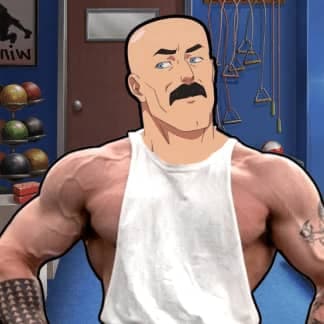
Advanced hypertrophy program used by Coach Butler (Bald Omni-Man)
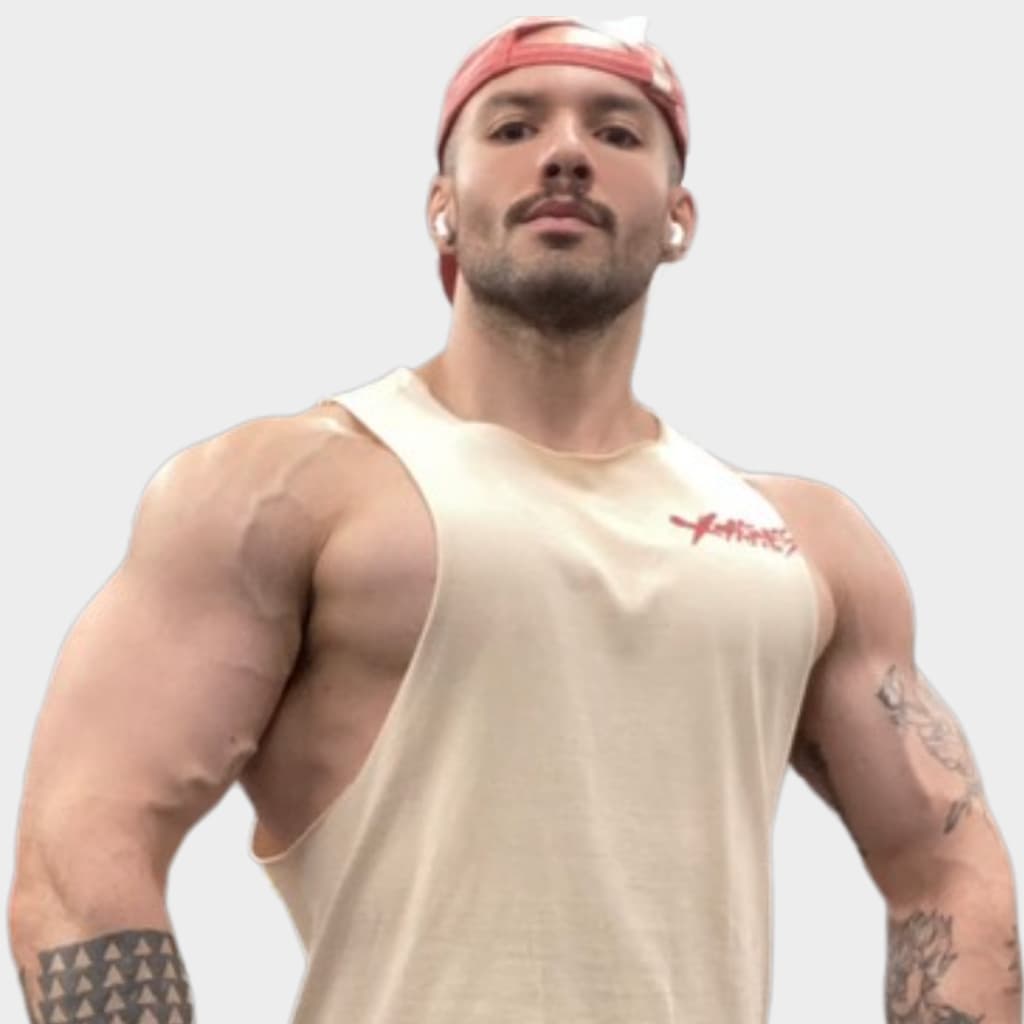
Coach Paris Butler. YouTuber (70K+ Subs)
Overview
This is identical to what I personally do. This is probaly way too much for a beginner or intermediate level lifter to do. I do not recommend this version of the program unless you're bulking and are already a very advanced trainee.
Bald Swordsman is a split on a 10-11 day asynchronous schedule. Trainees need at least a day of rest in between these sessions. Therefore, there is no need to strictly follow the 4 day a week schedule.
PROGRAM GUIDE
Newer Trainees: I gave a range of sets that you can do, newer trainees should pick the lowest number of sets, and trainees who need more volume should pick the higher number of sets.
Progressions: With double and dynamic double progressions on your first week, make sure to keep a couple reps in the tank on your first set. Personally, I try to hit the top end of the rep range on my first set, and then I spend the subsequent weeks filling out the subsequent sets. This lets me create momentum and smoother progression
Intraworkout Nutrition: I recommend intra workout nutrition of a quick digesting carb (fruit, Gatorade etc). re-hydration (think water, salt, potassium, magnesium), is important as well. For best results, place this somewhere in the middle of your training session.
Deload Protocol: Deload intuitively, you can push hard for a lot longer than you think you can. For those that prefer scheduled deloads, you can also deload every 6-8 weeks periodically. For deload week, go easy on 1-2 sessions that week, then resume the rest of the week as planned.
Rest Days: Bald Swordsman is a split on a 10-11 day asynchronous schedule. Trainees need at least a day of rest in between these sessions. Therefore, there is no need to strictly follow the 4 day a week schedule.
Leg Day Warm Ups: 5-10 minutes on a stationary bike, alternate between reverse and normal pedaling. Increase the time on the bike as needed.
Push Warm-Ups: Light rows with a dumbbell, facepulls, and light weight dumbbell presses for a few sets of 20 (GO LIGHT…if your muscles are worked by this, you did too much)
Pull Warm-ups: Band Pressdowns and Curls for blood flow
Double Progression and Dynamic Double Progression
Double Progression and Dynamic Double Progression are easy ways to map out progression and auto-regulate your training. (Auto-regulate meaning: make training appropriately challenging)
I like using this in a hypertrophy program, because unlike traditional strength training, we don’t have percentages to work with. Particularly for things like Calf Raises, Hamstring Curls, Hack Squats, and all traditional bodybuilding staples.
Double Progression
In basic Double Progression, you’re given a set and rep range.
For example, 3 sets of 8-12. Each week, you add reps until you’re at 3x12, then you add weight and do it all over again.
This type of progression undulates between volume and intensity, allowing you to typically train harder without a deload.
There are two ways to start off a double progression. You can do 3 sets of 8 (leaving a couple reps in the tank on your first set) and then each week, add reps until you get to 3x12. You can add reps to each set, or reps to one set at a time.
OR If you’re newer, you can do 12 reps on your first set (leaving a couple reps in the tank) and then fill out your reps on subsequent sets each week.
(This second approach is typically the approach I take for new exercises that I’m not sure of my performance on) I also recommend this for people who tend to UNDERSHOOT (go too easy)
When you add weight, add enough weight so that 8-9 reps would be challenging again (tl,dr; add like 5-10 lbs)
Then you follow the same progression scheme for the new weight you’ve selected
Dynamic Double Progression
Dynamic Double Progression is basically the same thing, except that each individual set progresses in weight on its own once you reach the top end of your rep range. For example, using 8-12 again:
Week 1: 3x8 @ 200
Week 2: 1x12 @ 200 (increase this set’s weight next week) 1x10 @200, 1x9 @ 200
Week 3: 1x8 @ 210, 1x12@ 200 (increase this set’s weight next time), 1x10 @200
So on, and so forth. This type of progression is better for heavier compound lifts in my opinion.
General Reminders:
The way that I like to coach double progression and dynamic double progression is like this:
That first week you try a new exercise, each set, other maybe than the last couple, should be a couple reps shy of failure. This lets you create momentum with your training. As opposed to if you go to failure on everything week 1, you’ll have a harder time (or an impossible time) progressing.
For subsequent weeks, more and more of your sets can be (and should be, in my opinion), close to, or at failure.
If you undershoot that first week, the way double progressions work, you’ll be using a challenging weight anyway with time.
When to Swap Movements
I say that we should keep our motions in rotation for as long as possible. It’s very easy to fall into the trap of constantly swapping exercises, and never make any real progress.
But if we keep our motions in for long enough to outlast noobie neurological adaptations, we can ensure that any progress that we make comes from actual hypertrophy, and not just neurological strength adaptations.
When you DO swap a movement, pick a variation that works the same muscles as the one that you were just doing, so the thread of progression can remain.
It’s important to take note of which variations work the best for us as well, so that you can swap back to them when the time comes.
Rep Quality
I go by the rule of “how would I do this if Dr Mike Israetel was watching?” - I would use a controlled (but not overly slow) eccentric, and a pause when applicable.
That being said, don’t get pedantic - just maintain +/- 10% of your rep quality at all times. Too much control leads to inferior stimulus typically (especially if you’re not very strong yet, and can’t use a lot of weight). Too little control leads to the muscles not being stimulated well.
Who it's for
Reviews
This was a fun and challenging program! Coming from a 6 day per week split previously, this was completely different than what I was used to. I replaced all neck work with barbell shrugs. Needless to say, my traps blew up. Recovery was good, even with training traps every other day. I also replaced the towel pull-ups with a pulldown variation. The ring pushups were new to me, and I grew to really enjoy them. They hammered my upper chest. Definitely follow the schedule. 1 rest day between every training session. I’d also highly recommend intra workout carbs, like Gatorade. These are some brutal sessions. Bicep volume was a little lacking for me. My back, chest, and triceps made some really good improvements on this program. The training schedule of ‘Bald Swordsman’ allows for great recovery, and really allows you to drive performance in the gym. All in all I was very impressed with this program. If I were to run this again, I would replace neck work on each workout with the following: Shrugs or biceps on workout A, Shrugs on workout B Biceps on workout C Shrugs on workout D Biceps on workout E (after long rope press down).
Disclaimer: I followed the program exactly as outlined on the overview (Monday/Tuesday/Thursday/Friday). This review reflects my personal experience only - I can absolutely see how Coach Butler or a select group of advanced trainees might benefit more from this routine. In short: This program feels more like an optimized routine designed specifically for Bald Omni-Man rather than a general advanced trainee program. One thing that confused me was the scheduling. Boostcamp lists the program as Mon/Tue/Thu/Fri, but Coach Butler also writes that you “need at least a day of rest between these sessions.” It’s unclear whether “sessions” refer to the entire A-E workout rotation or just individual workouts. Based on my experience, I’d say it’s the latter - doing Workout B right after Workout A felt overly fatiguing. To be more specific about what didn’t work for me: the triceps volume is extremely high. There are roughly 6–7 sets of triceps work in nearly every session (except Workout B). This might make perfect sense if triceps are a personal weak point for Coach Butler, but for most people, that level of volume might be excessive. I can see the logic of applying that kind of focus to neck training since it tends to recover quickly - as long as you avoid pushing it to failure (an RPE 10 on neck work wouldn’t be a great idea). On the other hand, I felt the program lacked sufficient back focus. For example, in Workout D, the back exercises felt a bit gimmicky. The towel push-up targets the forearms more than the back, and the L-sit pull-up feels like a fantastic ab exercise, but I personally struggled to engage my lats properly during it. Maybe that’s due to a weaker core on my end - possible. Still, there are other back exercises that could hit the target muscles more directly and balance out the program better. Direct rear delt work is also nearly absent, and hamstring volume feels quite low as well. All that said, I think this program could feel much better if performed every other day (EOD) with some adjustments to volume and exercise selection - especially dialing back the triceps work and adding a bit more for the back and hamstrings. Even though I’m giving this program only 2 stars, that’s purely because it didn’t click with me. It might very well click with you. I’m sure Coach Butler has more expertise than I do, and this program is likely fine-tuned for his own training preferences and recovery abilities. To end on a positive note: thanks to Bald Omni-Man for making this program publicly available. Even though it didn’t fully resonate with me, I still learned quite a lot from running it.
I would definitely recommend it to anyone
Changed neck work for more lightweight exercises targeting my weaknesses and changed weighted pulls for lat pulldowns. Other than that, followed the program as is. Crazy results, feels like noob gains all over again. Extremely hard, 5 years of experience and this thing pushes me to my absolute limit. Great muscle gains, but even better results in terms of work capacity.
Muscle engagement
| # | Exercise | Sets | Reps |
|---|---|---|---|
| 1 | Leg Press | 4 | 8–15 reps |
| 2 | Safety Bar Squat | 2 | 5–8 reps |
| 3 | Neck Work | 5 | 12–20 reps |
| 4 | Guillotine Press | 4 | 7–12 reps |
| 5 | Seated Lateral Raise | 3 | 12–20 reps |
| 6 | Dual Tricep Pushdown (Cable) | 4 | 8–12 reps |
| 7 | Lying Decline Triceps Extension | 3 | 8–12 reps |
| 8 | Leg Raise | 1 | 46 reps |
| # | Exercise | Sets | Reps |
|---|---|---|---|
| 1 | Pull-Up | 4 | 7–12 reps |
| 2 | Seated Anterior Delt Press | 3 | 12–20 reps |
| 3 | Neck Work | 4 | 12–20 reps |
| 4 | Reach Style Barbell Row | 3 | 8–15 reps |
| 5 | Incline Curl (Dumbbell) | 3 | 8–12 reps |
| 6 | Lying Hamstring Curl | 3 | 8–12 reps |
| 7 | Preacher Hammer Curl (Dumbbell) | 3 | 8–12 reps |
| 8 | Sit Up (Weighted) | 5 | 10–15 reps |
| 9 | Calf Raise | 5 | 10–20 reps |
| # | Exercise | Sets | Reps |
|---|---|---|---|
| 1 | Neck Work | 5 | 12–20 reps |
| 2 | Camber Bar Bench Press | 4 | 6–10 reps |
| 3 | Leg Press | 4 | 7–12 reps |
| 4 | Pec Fly | 3 | 8–12 reps |
| 5 | Hip Adductor (Machine) | 3 | 8–12 reps |
| 6 | Sit Up (Weighted) | 1 | 46 reps |
| 7 | Standing Calf Raise | 5 | 10–20 reps |
| 8 | Long Rope Pressdown | 3 | 8–12 reps |
| 9 | Seated Lateral Raise | 3 | 10–15 reps |
| 10 | Seated French Press | 3 | 5–12 reps |
| 11 | Leg Extension | 1 | 36 reps |
| # | Exercise | Sets | Reps |
|---|---|---|---|
| 1 | Leg Extension | 5 | 10–15 reps |
| 2 | L Sit Pull-Up | 4 | 15–25 reps |
| 3 | Neck Work | 4 | 10–15 reps |
| 4 | Full RTO Ring Push-up | 4 | 5–10 reps |
| 5 | Towel Pull-up | 3 | 12–20 reps |
| 6 | Dual Tricep Pushdown (Cable) | 3 | 8–12 reps |
| 7 | Strict Curl | 3 | 8–12 reps |
| 8 | JM Press + Close Grip Bench Drop Set | 2 | 8–12 reps |
| 9 | Reverse Curls | 2 | 10–15 reps |
Weeks 2–10 are in the app
Download Boostcamp to follow the full program with auto-progression and built-in coaching notes.
The coach
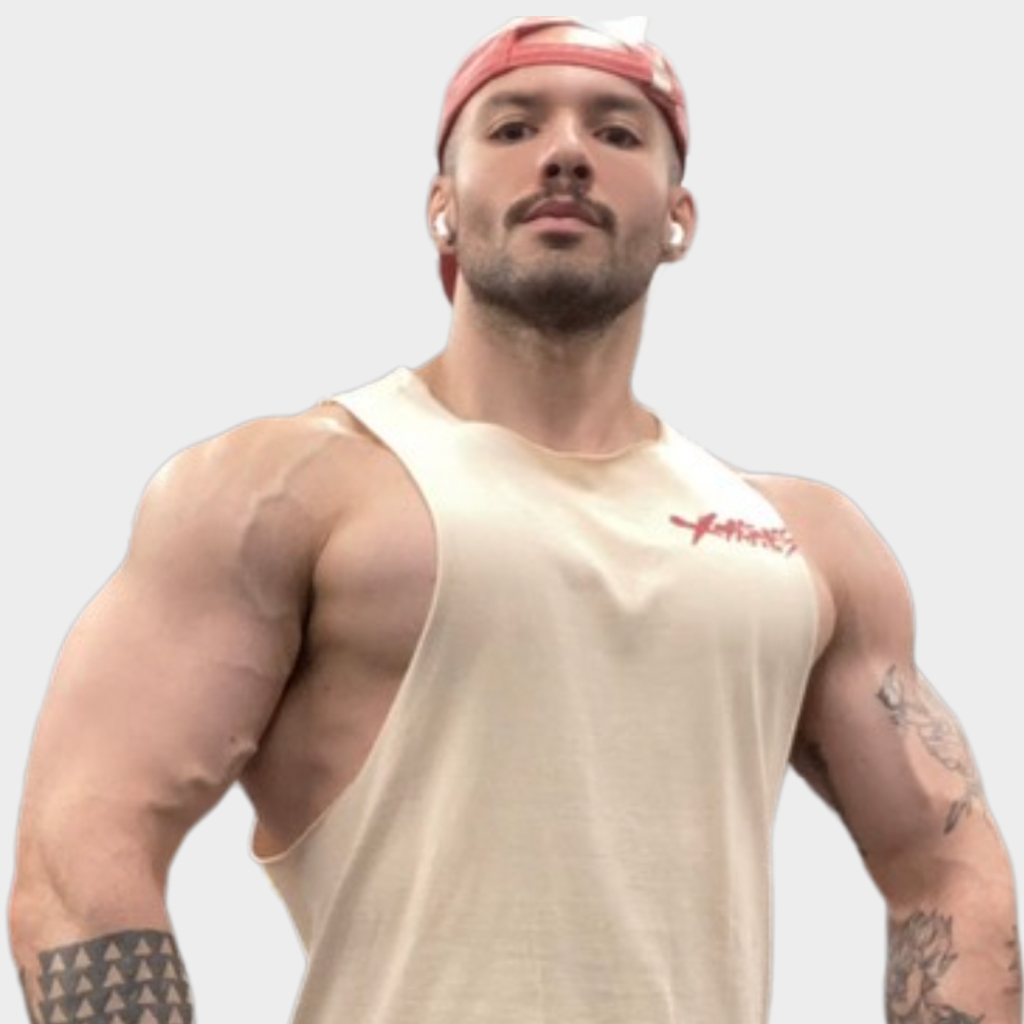

Hey guys! My name is Coach Butler, not Bald Omni-Man. My YouTube channel is all about showing you how to lift. This channel is meant to be my personal training log, and a resource for anyone that wants to learn how to train for long term success!
I’m a big fan of anime, manga, video games, and western works of art as well. It would be hard for you to name something I haven’t watched or read! Disclaimer: Bald Omni-Man is not a medical professional or a doctor. Always consult a medical professional before starting any exercise program. Use of this information is strictly at your own risk. Bald Omni-Man will not assume any liability for direct or indirect losses or damages that may result from the use of information contained in this video, including, but not limited to economic loss, injury, illness, or death.
How Bald Swordman works
Bald Swordman is a standard-length, 10-week, 4-day-per-week hypertrophy program written for advanced lifters. Each session takes around 75 minutes to complete. It was created by Bald Omni-Man and is published on Boostcamp with full week-by-week structure built in.
The program runs as a 10-week block with the same training-day structure throughout. It's built around a full gym setup. Inside the Boostcamp app, working weights and targets auto-progress between sessions based on what you actually lifted, so you don't manage the math by hand.
Bald Swordman is written for advanced lifters with multiple years of dedicated training. Programming density and load assume you can recover from harder sessions. Over 1,217 Boostcamp athletes have run it. It's fully free on Boostcamp. Every week is unlocked from day one on iOS and Android.
Common questions
Yes, Bald Swordman is completely free to follow on Boostcamp. There's no subscription or payment required. Download the app on iOS or Android, search for the program, and you can start your first workout immediately. All 10 weeks are fully unlocked.
This program is built around a full gym. Make sure you have consistent access before starting, since the progression model assumes you can perform the same movements week over week. If you're missing something, the Boostcamp app includes substitution suggestions inside each workout.
Each session typically takes around 75 minutes to complete. That estimate covers your working sets but doesn't account for warm-up or rest between sets, so budget a little extra time when you're first learning the movements. As you get familiar with the program, sessions tend to move faster.
Bald Swordman is structured around 4 training days per week, with rest days built in to allow for recovery. Consistent rest is as important as the training itself. Skipping rest days can stall your progress. The app lets you reschedule sessions if your week doesn't go to plan.
The program runs for 10 weeks. The structure is designed so that each week builds on the last, with weights, volume, or intensity progressively increasing as you go. Many athletes choose to repeat the program after finishing, either at a higher starting weight or with a different variation.
Bald Swordman is available inside the Boostcamp app, free on iOS and Android. Once you download the app, you can search for the program by name or find it on the coach's profile. The app tracks all your sets and weights automatically, so you always know exactly what to do next session.
Get started