70s Powerlifter
18 week old school powerlifting protocol to will leave you in a different solar system

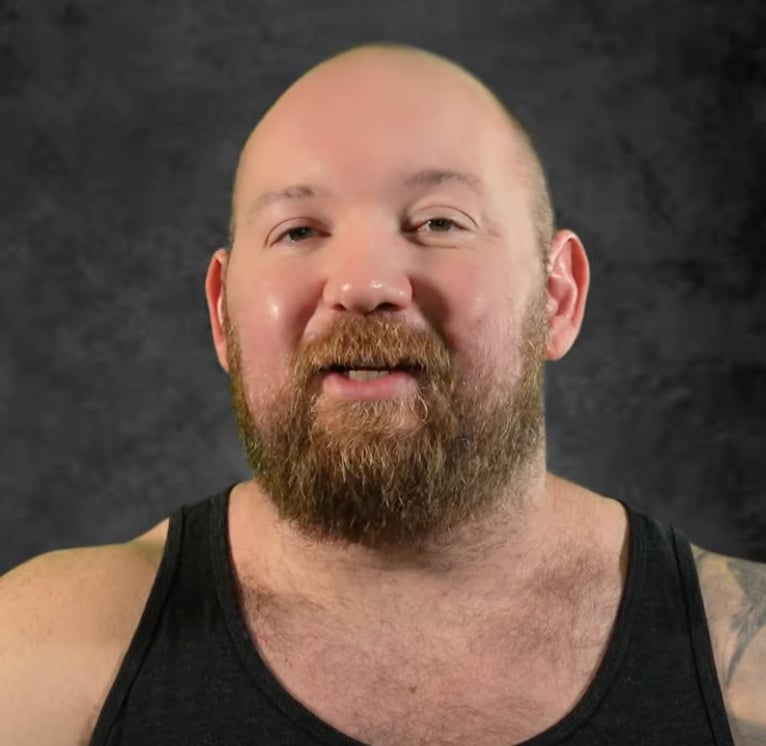
Professional strongman and powerlifter, YouTuber with 75K subs
Overview
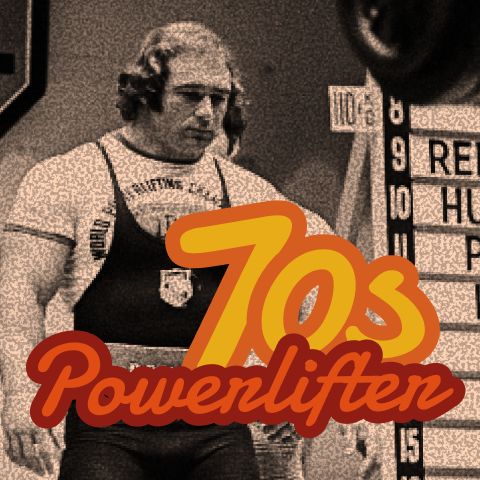
The 70s Powerlifter Program, by Alex Bromley, is designed with a heavy influence of the prototypical 70’s powerlifter here (hence the name). Many of the accounts of some of the monsters that populated meets at that time, such as Doug Young and Bill Kazmaier, cited high volume approaches with many compound variations and plenty of bodybuilding movements to top it off.
Read more about the program below for an overview and progression guidance.
70s Powerlifter Program
4 Days per week
Upper/Lower/Upper/Lower (1 lift each day)
3 - 3 Week Volumizing Waves
3 - 3 Week Intensifying Waves
Leans on both Variations of Main Lift and Bodybuilding Work
PROGRAM OVERVIEW
There’s a heavy influence of the prototypical 70’s lifter here. Many of the accounts of some of the monsters that populated meets at that time, such as Doug Young and Bill Kazmaier, cited high volume approaches with many compound variations and plenty of bodybuilding movements to top it off.
There was also an apparent lack of creativity in the progressions, something I see as a positive. If the main lift was done for 5 sets of 10, often times, so were the second and third. Turns out they all progressed just as well as if they had been done for 8s, 6s, 12s, or anything in between. Each lift doesn’t, in fact, need it’s own unique progression scheme. Just set a baseline of work for each lift and progress forward.
PROGRAM INSTRUCTIONS
Main movement %'s
The range in percentages (ex. 60-65-75%) is to give you flexibility depending on how you recover each week. If the weight moves well, do most of your sets at the top range. If you feel under-recovered, do all of them at the low end. Increases in weight is second priority; the important thing is that weight doesn't go down as you add a set each week.
Deload weeks
Deload weeks are not included in the written program. However, take a deload week as needed.
Be warned
This is an abnormal amount of work. The point of programming is to adapt to amounts of work that you are not used to. If you commit to this, understand that success hinges on reasonable weight selection. You will be more and more fatigued for each successive compound movement, so be prepared to adjust the weights way down. If any set in the Base phase was within 3 reps of failure, it was too heavy.
Who it's for
Reviews
I love this program because it brings back the importance of the basics. I’m only ten weeks in and already noticing that my strength is going up quick and my muscles are looking much fuller. Only four days a week so not much to commit to and I am a farmer so it’s hard for me to always find time to hit the gym every day. Give it a go it won’t disappoint
Really good program - in week 4 now and the first 3 weeks were an intense load, mentally and physically very challenging but can notice a difference in my body composition already Ive been training for almost a year post partum and just needed to take my efforts to the next stage and this program has defs done that for me
The program is really good, the first two weeks were fatiguing but I got used to it. My bench reps have increased drastically, along with my deadlift reps. Overall great strength builder for me. Muscle not so much, but my chest and arms did grow, as well as my shoulders.
It works man
Muscle engagement
| # | Exercise | Sets | Reps | Intensity |
|---|---|---|---|---|
| 1 | Bench Press (Barbell) | 3 | 10 reps | 60% |
| 2 | Bench Press (Wide Grip) | 2 | 10 reps | @6–7 |
| 3 | Incline Bench Press (Barbell) | 2 | 10 reps | @6–7 |
| 4 | Lat Pulldown | 3 | 15 reps | — |
| 5 | T-Bar Row | 3 | 15 reps | — |
| 6 | Bicep Curl (Barbell) | 3 | 15 reps | — |
| # | Exercise | Sets | Reps | Intensity |
|---|---|---|---|---|
| 1 | Squat (Barbell) | 3 | 10 reps | 60% |
| 2 | Wide Squat | 2 | 10 reps | @6–7 |
| 3 | Front Squat (Barbell) | 2 | 10 reps | @6–7 |
| 4 | Leg Extension | 3 | 15 reps | — |
| 5 | Lunge (Barbell) | 3 | 15 reps | — |
| 6 | Sit Up | 3 | 15 reps | — |
| # | Exercise | Sets | Reps | Intensity |
|---|---|---|---|---|
| 1 | Overhead Press (Barbell) | 3 | 10 reps | 60% |
| 2 | Bench Press (Wide Grip) | 2 | 10 reps | @6–7 |
| 3 | Behind-the-Neck Push Press | 2 | 10 reps | @6–7 |
| 4 | Lateral Raise (Dumbbell) | 3 | 15 reps | — |
| 5 | Skull Crusher | 3 | 15 reps | — |
| 6 | Tricep Rope Push Down (Cable) | 3 | 15 reps | — |
| # | Exercise | Sets | Reps | Intensity |
|---|---|---|---|---|
| 1 | Deadlift (Barbell) | 3 | 10 reps | 60% |
| 2 | Romanian Deadlift (Barbell) | 2 | 10 reps | @6–7 |
| 3 | Good Morning | 2 | 10 reps | @6–7 |
| 4 | Bent Over Row (Barbell) | 3 | 15 reps | — |
| 5 | Hamstring Curl | 3 | 15 reps | — |
| 6 | Leg Raise | 3 | 15 reps | — |
Weeks 2–18 are in the app
Download Boostcamp to follow the full program with auto-progression and built-in coaching notes.
The coach

How 70s Powerlifter works
70s Powerlifter is a long, 18-week, 4-day-per-week strength program written for intermediate lifters. Each session takes around 90 minutes to complete. It was created by Alex Bromley and is published on Boostcamp with full week-by-week structure built in.
The program runs as a 18-week block with the same training-day structure throughout. It's built around a full gym setup. Inside the Boostcamp app, working weights and targets auto-progress between sessions based on what you actually lifted, so you don't manage the math by hand.
70s Powerlifter is best suited to lifters who already have 6–18 months of consistent training and know their working weights for the main lifts. Over 9,827 Boostcamp athletes have run it. It's fully free on Boostcamp. Every week is unlocked from day one on iOS and Android.
Common questions
Yes, 70s Powerlifter is completely free to follow on Boostcamp. There's no subscription or payment required. Download the app on iOS or Android, search for the program, and you can start your first workout immediately. All 18 weeks are fully unlocked.
This program is built around a full gym. Make sure you have consistent access before starting, since the progression model assumes you can perform the same movements week over week. If you're missing something, the Boostcamp app includes substitution suggestions inside each workout.
Each session typically takes around 90 minutes to complete. That estimate covers your working sets but doesn't account for warm-up or rest between sets, so budget a little extra time when you're first learning the movements. As you get familiar with the program, sessions tend to move faster.
70s Powerlifter is structured around 4 training days per week, with rest days built in to allow for recovery. Consistent rest is as important as the training itself. Skipping rest days can stall your progress. The app lets you reschedule sessions if your week doesn't go to plan.
The program runs for 18 weeks. The structure is designed so that each week builds on the last, with weights, volume, or intensity progressively increasing as you go. Many athletes choose to repeat the program after finishing, either at a higher starting weight or with a different variation.
70s Powerlifter is available inside the Boostcamp app, free on iOS and Android. Once you download the app, you can search for the program by name or find it on the coach's profile. The app tracks all your sets and weights automatically, so you always know exactly what to do next session.
Get started