Looking for bodybuilding programs?
Browse free expert programs on Boostcamp
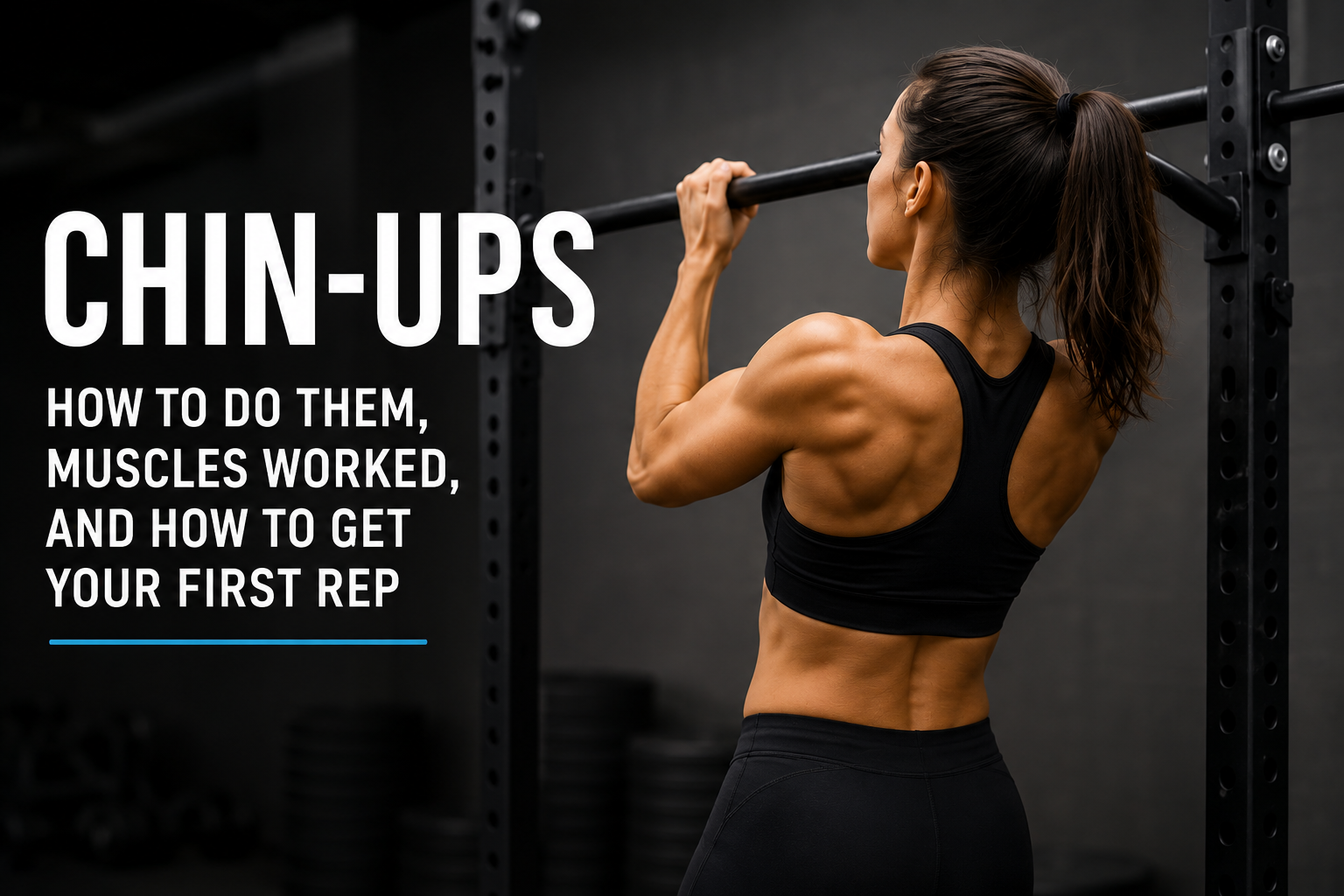
The chin-up is a vertical pulling exercise performed with an underhand, palms-toward-you grip. You hang from a bar with arms fully extended, then pull until your chin clears the bar, driving your elbows down toward your ribs. It is one of the most effective bodyweight movements for building the lats, biceps, and upper back, and for most people it is the easiest of the two classic bar pulls to learn first.
This guide covers exactly how to do a chin-up with good form, the muscles it trains, how it differs from the pull-up, the mistakes that hold people back, and a proven progression to your first unassisted rep. Last updated July 2026.
What muscles do chin-ups work?
Chin-ups primarily train the latissimus dorsi (the large muscles of your back), with heavy assistance from the biceps because of the supinated grip. Supporting muscles include the brachialis and brachioradialis in the arms, the teres major, the rhomboids and lower trapezius across the upper back, and the core, which stabilizes you against swinging.
The underhand grip is what shifts more of the load onto the biceps and takes some work off the lats compared with a pull-up, as NASM notes in its breakdown of the two movements. That is why chin-ups are often described as the better choice if bigger arms are a priority, while still delivering serious back development. Because so many muscles contribute at once, the chin-up is one of the most efficient upper-body exercises you can program.
Chin-ups vs pull-ups: what is the difference?
The difference is grip, and grip changes the emphasis. A chin-up uses a supinated (underhand) grip with palms facing you, usually about shoulder-width. A pull-up uses a pronated (overhand) grip with palms facing away, usually wider. Chin-ups recruit more biceps and tend to feel easier; pull-ups place greater isolated demand on the lats and feel harder for most lifters.
Neither is strictly better. If your goal is arm size and getting your first rep, start with chin-ups. If you are chasing a wider back and want maximum lat challenge, prioritize pull-ups. Most well-rounded programs rotate both. A neutral grip, with palms facing each other on parallel handles, sits between the two and is often the most shoulder-friendly option. Grip width also matters: a shoulder-width grip is the most comfortable starting point, while going much wider adds lat demand but stresses the shoulders more. For a deeper split-by-split look at how vertical pulling fits a full routine, see Boostcamp's hypertrophy training guide.
How to do a chin-up with proper form
Set up in a dead hang with an underhand, shoulder-width grip and arms fully straight. Pull your shoulders down and back to set them before you bend your elbows, brace your core and glutes to stop any swinging, then drive your elbows down toward your pockets until your chin clears the bar. Lower yourself under control until your arms are fully extended again. That is one rep.
Step by step:
Grip the bar with palms facing you, hands roughly shoulder-width apart.
Start from a full dead hang with arms straight, so every rep covers the complete range of motion.
Set your shoulders down and back to protect the joint and engage the back.
Brace your abs and glutes to keep the body still and vertical.
Pull by driving the elbows down and back, not by curling with the arms alone, until your chin is above the bar.
Lower slowly and fully, straightening the arms at the bottom without letting the shoulders collapse.
What are the most common chin-up mistakes?
The most common mistakes are swinging for momentum, cutting the range of motion short, failing to set the shoulders, and neglecting the core. Each one either reduces the training effect or increases the risk of an irritated shoulder or elbow.
Swinging or kipping. Using a leg swing to throw yourself up removes tension from the target muscles. Keep the movement strict and controlled.
Partial range of motion. Stopping before the chin clears the bar, or never straightening the arms at the bottom, trains only a slice of the movement. Full reps build more strength and size.
Poor shoulder engagement. Starting a pull without first pulling the shoulders down and back strains the joint. Set the shoulders first.
Loose core. A slack midsection leads to swinging and wasted effort. Stay braced from the first rep to the last.
How to get your first chin-up: a step-by-step progression
To get your first chin-up, train the movement two to three times per week using band-assisted reps and slow negatives, and test an unassisted rep about once a week. Both methods build the exact strength and pattern the full movement needs, so progress is steady and measurable.
Band-assisted chin-ups. Loop a resistance band over the bar and place a knee or foot in it. Following the progression Barbell Logic recommends, pick a band that lets you get 5 to 7 clean reps. Build up to about 10 reps, then switch to a thinner band and drop back to 5 to 7 reps. When you can do 5 to 7 reps with the thinnest band, test a bodyweight rep.
Negative chin-ups. Jump or step to the top position with your chin over the bar, then lower yourself as slowly as possible, aiming for a 5 to 8 second descent. A simple progression: start with 6 sets of 1 at a slow count, add a rep each week toward 10 sets of 1, then increase the descent count and reduce sets (for example 6 sets of 2, then 5 sets of 3 with a longer lower). Retest a full rep when 5 sets of 3 feel controlled.
Supporting work. Inverted rows and lat pulldowns build the same pulling muscles and help beginners who cannot yet hold a dead hang. A structured beginner plan removes the guesswork here. Boostcamp's free Reddit Bodyweight Fitness Recommended Routine programs these progressions in order, and every set is tracked in-app so you can see the strength build week to week.
How many chin-ups should you do? Sets, reps, and frequency
For muscle growth, do 3 to 4 sets of 6 to 12 reps with 60 to 90 seconds of rest, training close to or at failure. For strength, do 4 to 6 sets of 3 to 6 reps at a higher intensity while leaving about two reps in reserve to protect technique. Either way, training the chin-up 2 to 3 times per week gives most lifters the frequency they need to improve.
Once bodyweight reps become easy, add load with a dip belt or a dumbbell between the feet. A weighted chin-up follows the same set and rep rules. Some coaches use a simple total-volume target, such as roughly 20 to 30 hard weighted reps in a session, as a way to keep the workload consistent, but the exact number matters less than progressing the weight over time. If you want a plan built entirely around getting stronger at the bar, the free Omar Isuf Pull-Up Program on Boostcamp progresses your pulling volume and intensity for you.
Are chin-ups worth it?
Yes. The chin-up builds upper-body pulling strength, adds size to the back and arms, trains grip, and requires almost no equipment beyond a bar. It is one of the highest-return movements a lifter can own, and because it scales from band-assisted reps all the way to heavy weighted sets, it stays useful from your first month of training through advanced programming.
The fastest way to progress is to follow a structured program that tells you exactly what to do each session and tracks it, rather than guessing. Boostcamp offers free expert-designed programs that build your pull from the ground up, log every rep, and adjust as you get stronger.
Frequently asked questions
Are chin-ups easier than pull-ups?
For most people, yes. The underhand grip lets the biceps assist more and keeps the load closer to your center of gravity, so chin-ups are usually the better first bar movement to learn.
How long does it take to get your first chin-up?
With consistent training two to three times a week using bands and negatives, many beginners reach their first unassisted rep within one to three months, though it varies with starting strength and bodyweight.
Do chin-ups build biceps?
Yes. Because of the supinated grip, chin-ups place significant load on the biceps and brachialis alongside the lats, which is why they are a favorite for building bigger arms.
How often should I do chin-ups?
Two to three sessions per week is effective for most lifters. That frequency provides enough volume to build strength and size while leaving time to recover between sessions.
Free App
Find your bodybuilding programs on Boostcamp
130+ free expert programs. Log every session and track your PRs.
Scan to download